
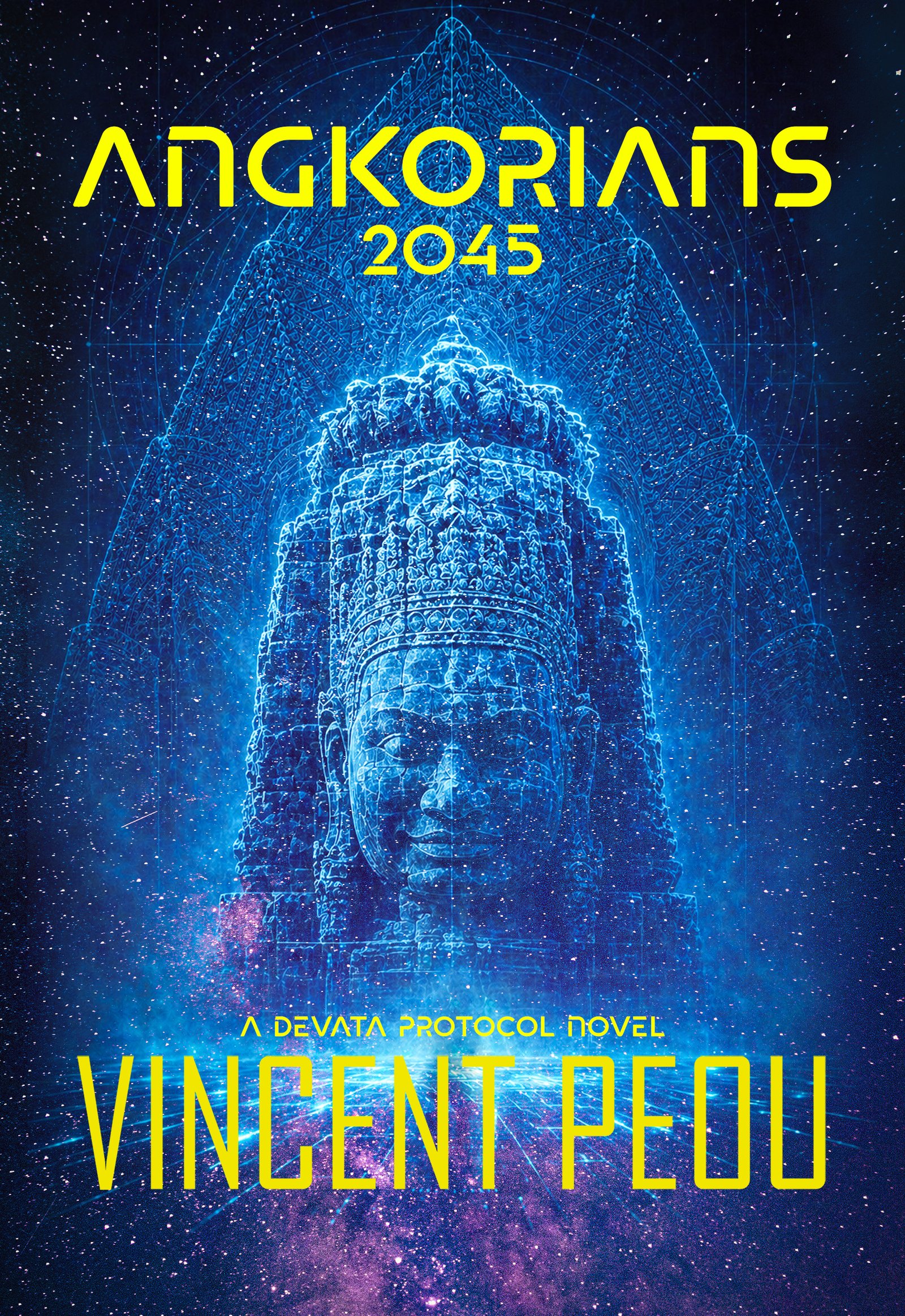
Set in the streets of Phnom Penh, this Cambodian science fiction novel does something no book has done before. It takes the ancient genius of the Khmer Empire and places it at the center of a thrilling, high-stakes adventure that spans time itself. The technology in this story is not imported from Silicon Valley or Tokyo. It is decoded from temple inscriptions at Angkor, hidden in ancient Khmer Sanskrit carvings, and built from blueprints that the gods left behind. For any reader curious about Cambodian history, Khmer mythology, or Southeast Asian literature, this novel is an absolute revelation.
The story follows Pheap, a teenage boy in present-day Phnom Penh who is quietly falling apart after the loss of his mother. He builds a radio from scavenged parts, trying to reach her voice across time. That single, heartbreaking idea is the seed of everything that follows, and what grows from it is extraordinary. By the time you reach 2045, Phnom Penh has become a bioluminescent city powered by zero-point energy, its skyline woven from living wood and solar silk, its streets free from poverty and illness. The vision of Cambodia as a global leader in science and human progress is bold, original, and deeply moving.
Peou is not borrowing from Western science fiction. He is building his own genre from the ground up, using Cambodian stones.
What makes this novel stand out in the world of Asian science fiction and speculative fiction is how completely it belongs to Cambodian culture. The artificial intelligence at the heart of the story takes the form of Preah Pisnukar, the Divine Architect of Angkor Wat. The ultimate weapon is the Apsara Veil, a shield made of celestial dancers drawn from classical Khmer dance and mythology. Even the physics is rooted in the Golden Ratio found in the proportions of Angkor.
The characters will stay with you. Pheap is the kind of hero who helps everyone around him while quietly destroying himself. His best friend Vannak, a boy who has spent seven years in a wheelchair after a brutal act of bullying, gains extraordinary abilities and becomes one of the most complex, heartbreaking figures in recent fiction. His journey from victim to something far more dangerous asks hard questions about justice, trauma, and what we become when we are finally given power over the people who hurt us. Ashley, a scholarship student from a poor province who carries the weight of her family's sacrifice, brings history, wisdom, and a fierce moral clarity to the story.
This is a coming-of-age story, a superhero origin story, a time travel thriller, and a love letter to Cambodia all at once. It is also one of the most genuinely surprising reads in Southeast Asian literature today. Every chapter reframes what you thought you knew about where the story was going.